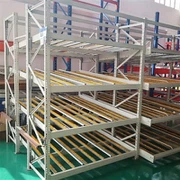
Definition Of Pallet Racking
Sep 18, 2025
Pallet racking, also known as beam racking or storage racking, is typically heavy-duty and is the most common type of warehouse racking system in China. The process begins with unitization, where goods are grouped according to their packaging and weight characteristics to determine the type, specifications, dimensions, single-pallet load capacity, and stacking height (single pallet weight is generally under 2000kg).
Based on this, the span, depth, and interlayer spacing of the unit racking are determined. The racking height is then determined by the effective height of the warehouse roof truss and the maximum forklift reach. Unit racking spans are generally within 4m, and depths within 1.5m.
Low and high-bay warehouse racking heights are generally within 12m, while ultra-high-bay warehouse racking heights are generally within 30m (these warehouses are mostly automated, and the total racking height consists of several sections of uprights no more than 12m high).
In these types of warehouses, low and high-bay warehouses mostly use reach trucks, counterbalance forklifts, and three-way forklifts for storage and retrieval operations. Electric stacker cranes can also be used when the racking is relatively low, and stacker cranes are used for very high-bay warehouses.
This type of racking system has high space utilization, flexible and convenient storage and retrieval, and with the assistance of computer management or control, it can basically meet the requirements of modern logistics systems.
Pallet racking also has high utilization, flexible and convenient storage and retrieval, and with the assistance of computer management or control, pallet racking can basically meet the requirements of modern logistics systems.